
Project Description
As part of the Aga Khan Development Network’s nine-month mentorship initiative in India, our team designed a dedicated community-driven web platform that helps mentors and mentees connect, engage, and schedule sessions with ease. The goal was to foster deeper connections, improve participation, and create a more meaningful mentorship experience for all participants.
Key Contributions
• Led end-to-end design efforts, conducting primary interviews with mentors and mentees to uncover pain points, synthesize insights, and define the core problem.
• Collaborated closely with the program manager and core team, presenting research findings, gathering feedback, and integrating their inputs to refine the product experience.
• Designed user flows for both mentor and mentee journeys, ensuring clarity, accessibility, and alignment with program goals.
• Developed the information architecture for the entire platform to establish logical navigation and intuitive content structure.
• Created design guidelines and a cohesive design system to maintain visual consistency and streamline handoffs across the product.
SKILLS
UX Research
Information Architecture
User Flows
Product Design
Design System
ROLE
Product Design Lead
TIMELINE
Mar’23 - Mar’24
TEAM
Program Manager
Core Team (8 members)
Project Lead
Design Lead (me)
Senior Engineer
Front-end Engineers
TOOLS
Figma
Figjam
Google Slides
CLIENT

About RFS Mentorship Program
Challenge
Mentors and mentees struggled to maintain consistent communication, track progress, and schedule sessions effectively.
This led to irregular interactions, unclear goals, poor documentation, and disengagement, making the mentorship journey less organized and meaningful for both sides.
Solution
The RFS Web Application connects mentors and mentees, simplifies scheduling, and brings clarity, structure, and impact to every session.
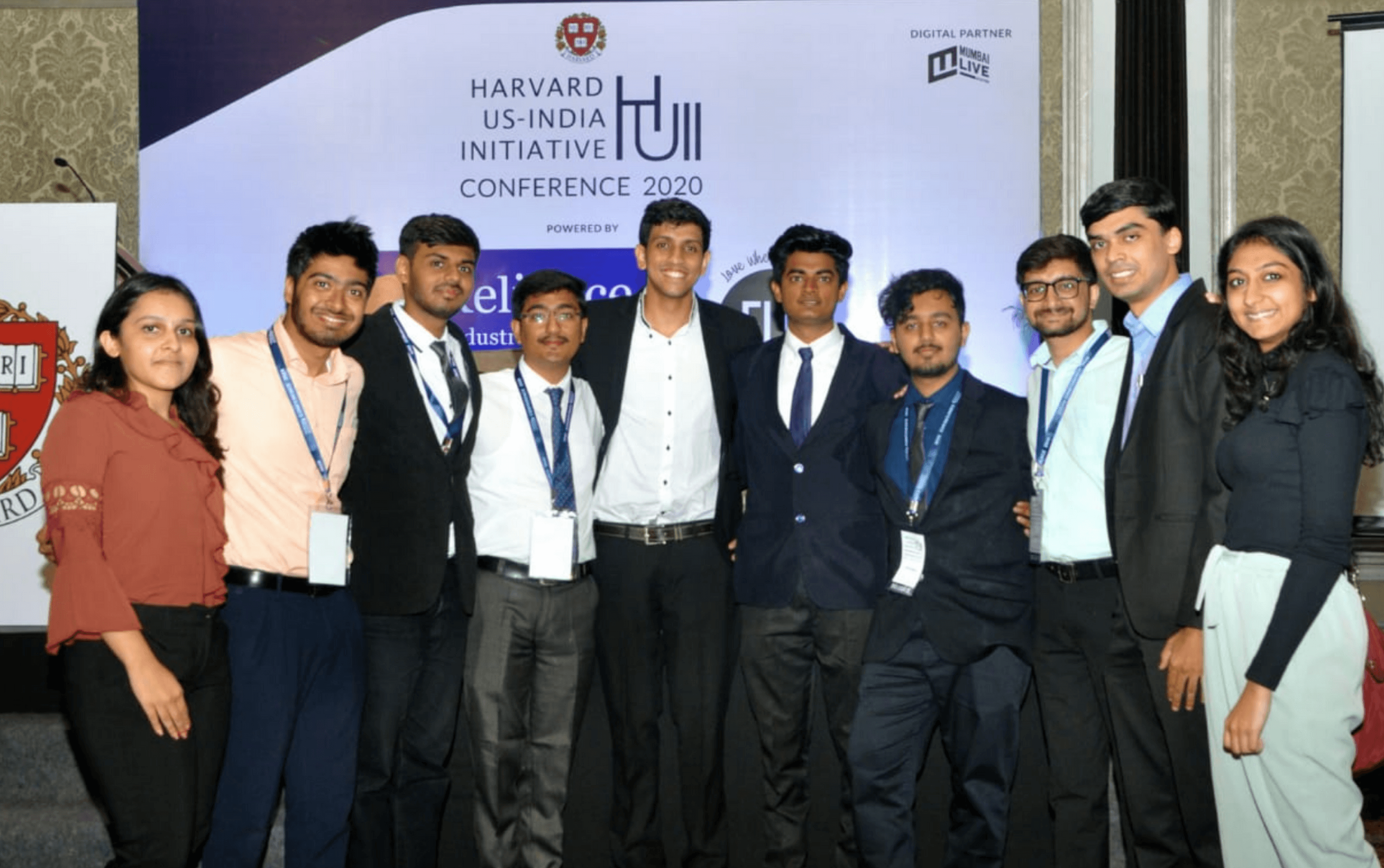
Reach For Stars RFS is a nine-month mentoring program that allows students to explore depth in their chosen careers
Every year, a group of 60 students and young professionals enroll in the program and are paired with mentors from their respective fields. Each student works closely with their mentor for a full year to set, track, and achieve their personal and professional goals. Mentors provide continuous guidance and support, helping students stay on course and reach their milestones successfully.
Available hours
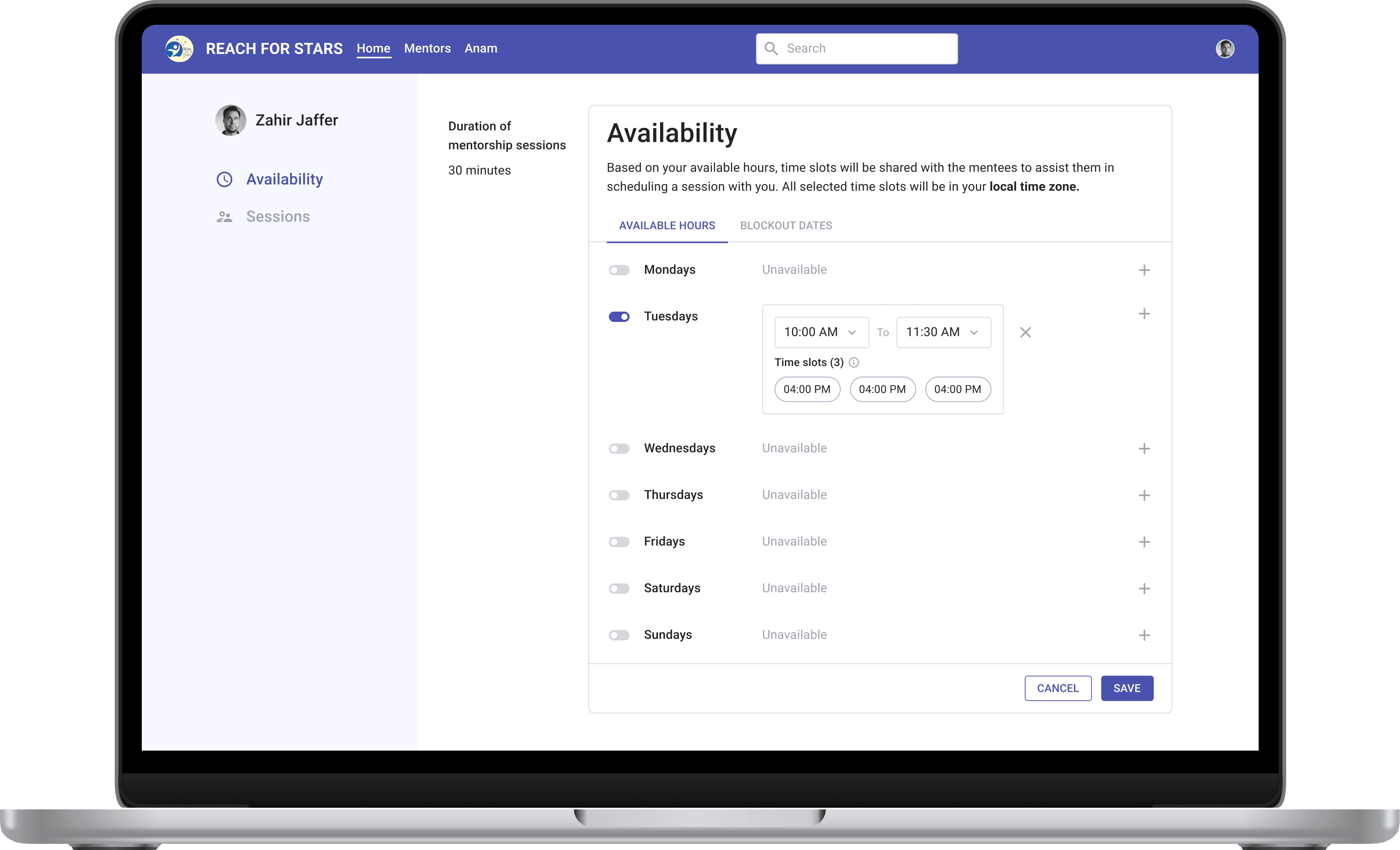
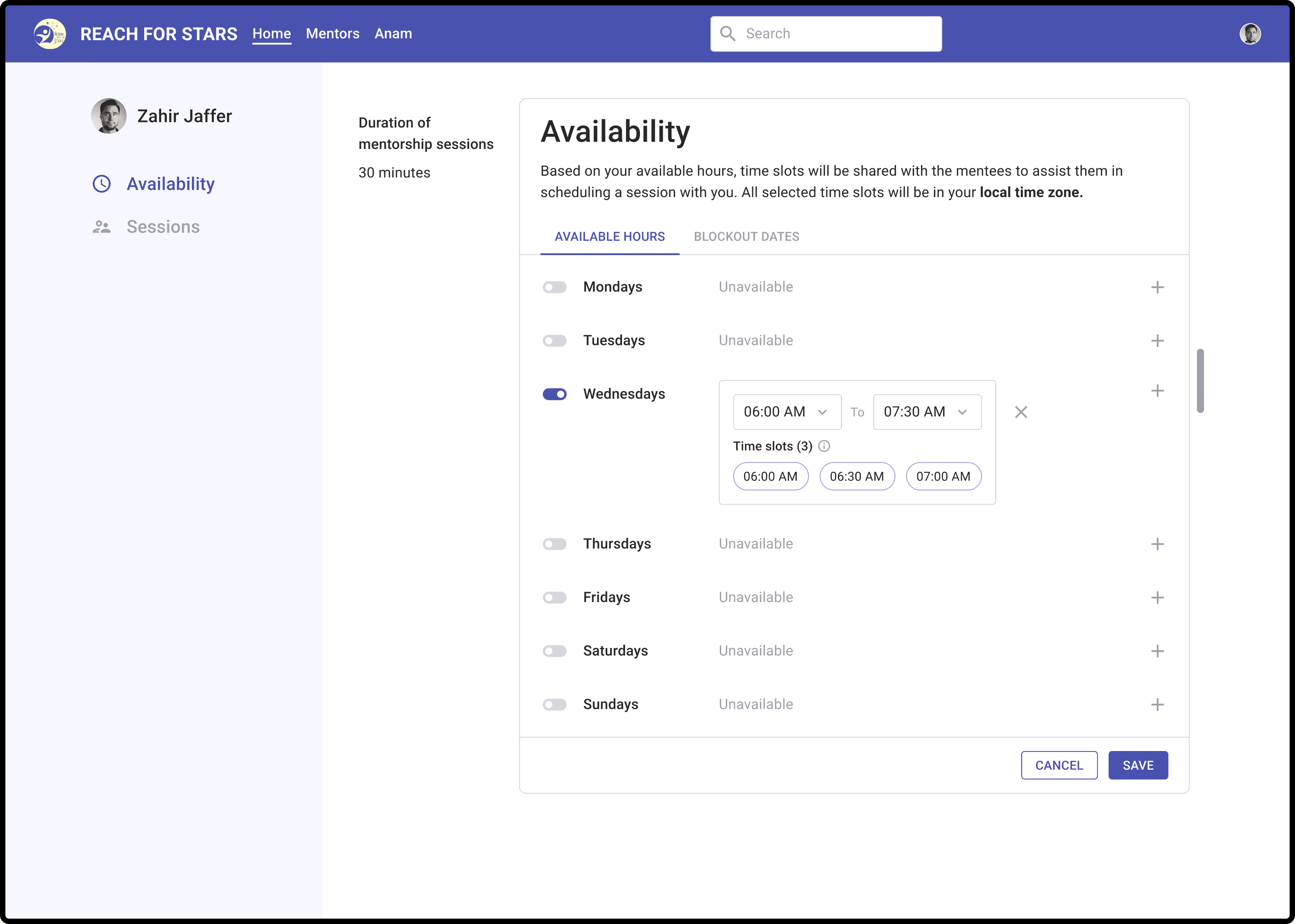
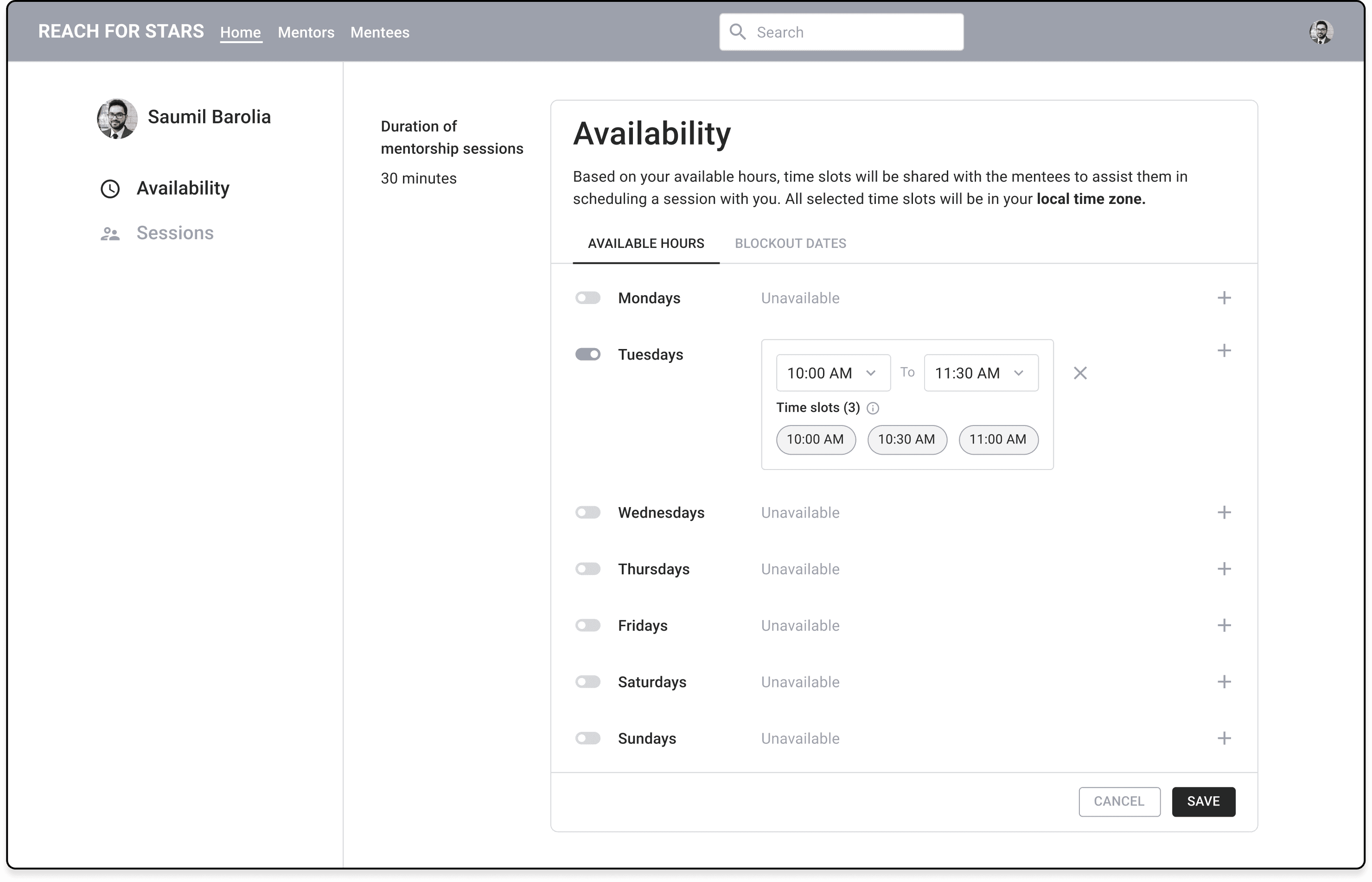
The system allows mentors to set their available hours for the week, which are automatically divided into 30-minute time slots that mentees can easily book for mentorship sessions.
Final Product
For RFS Mentors
Prototype 1 (Available hours)
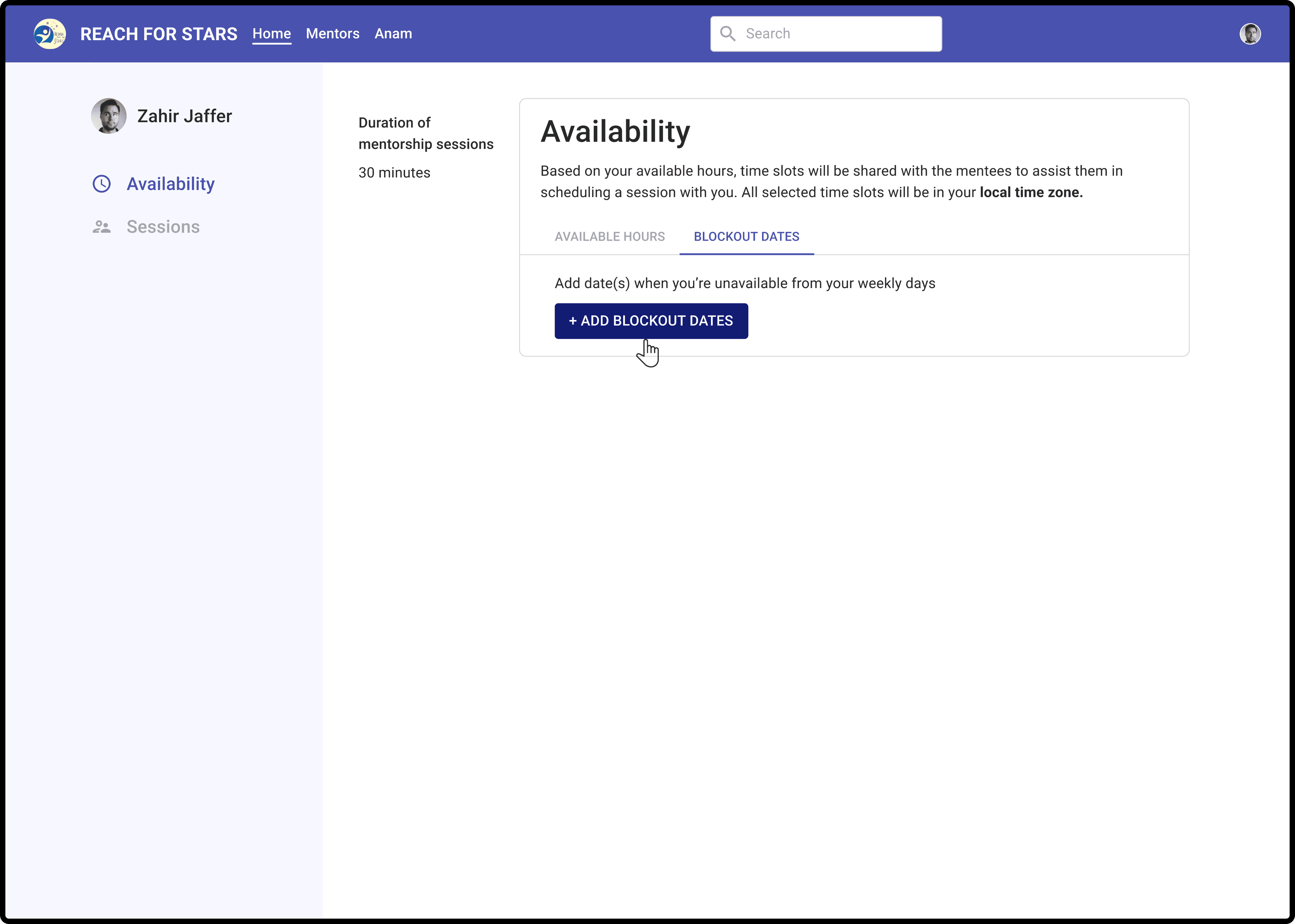
Blockout dates
They can add their block-out dates, giving them the flexibility to indicate when they are unavailable. This helps mentees plan and schedule sessions accordingly.
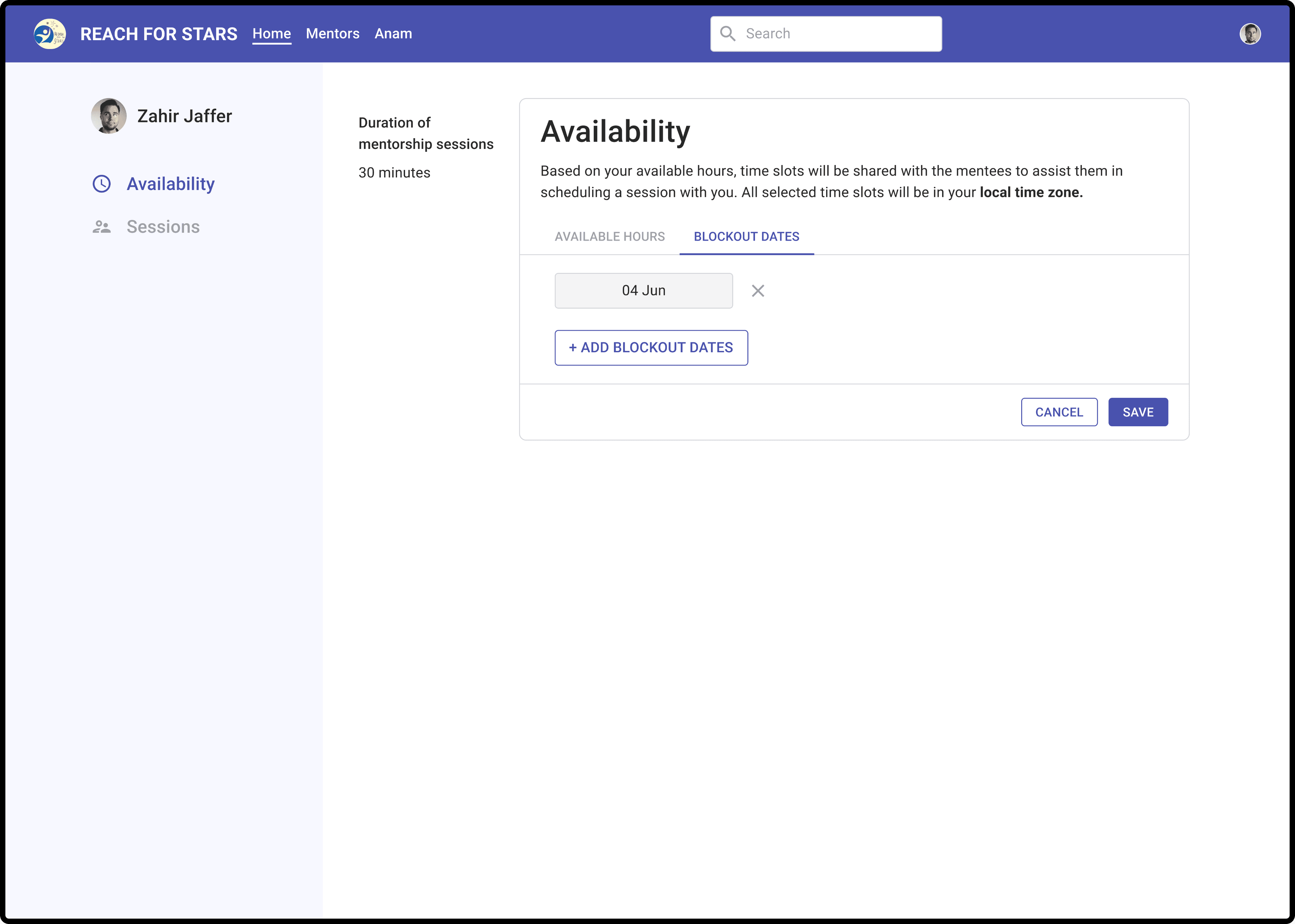
Prototype 2 (Blockout Dates)
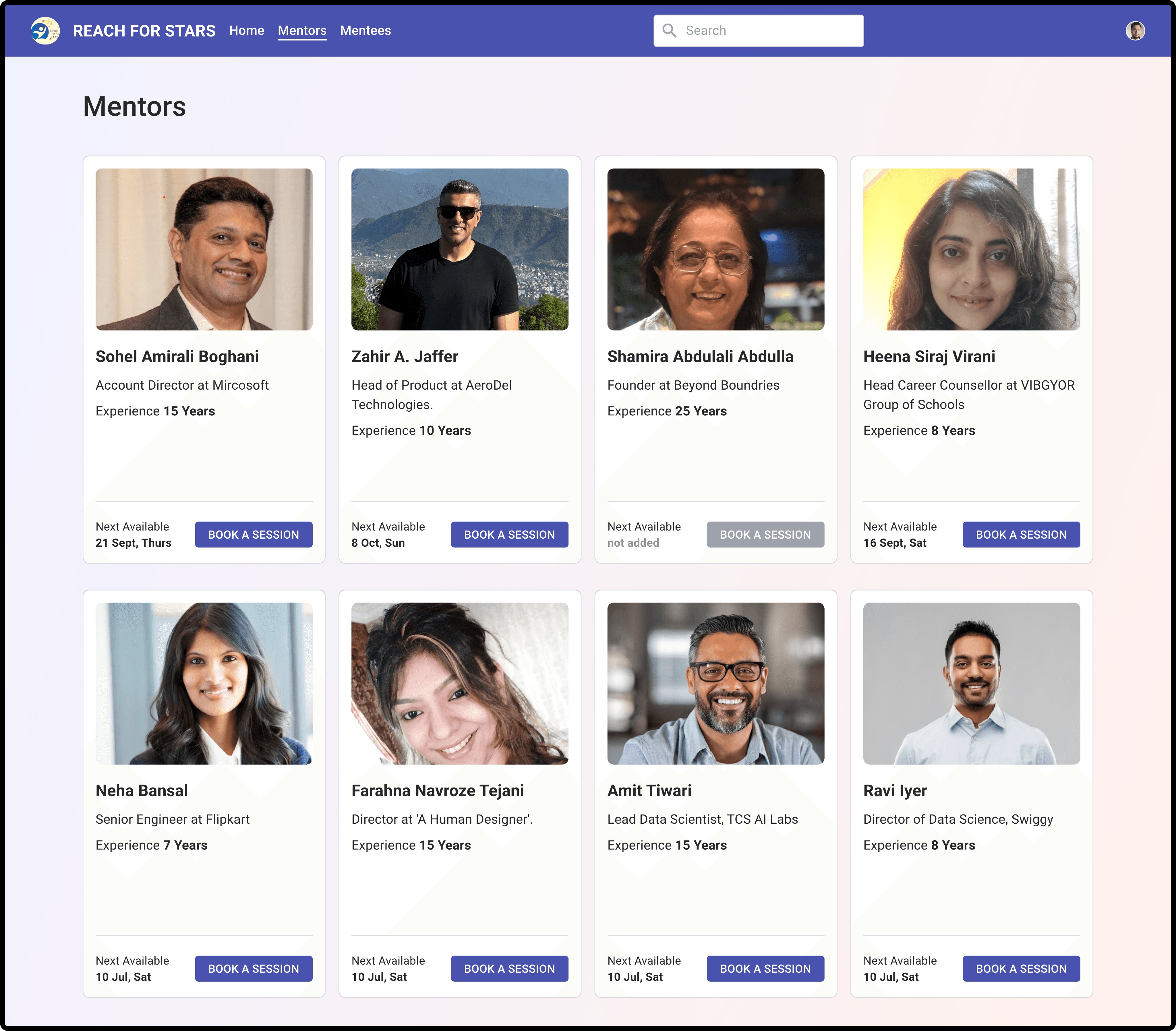
Networking opportunities
RFS mentees have the opportunity to connect not only with their assigned mentors but also with other mentors across the program, fostering cross-collaboration and broader learning.
Scheduling session
They can easily book a session with their mentor based on available time slots and define the purpose of the session. This gives mentors clarity on the mentees’ goals and helps them prepare in advance, making each mentorship session more focused and productive.
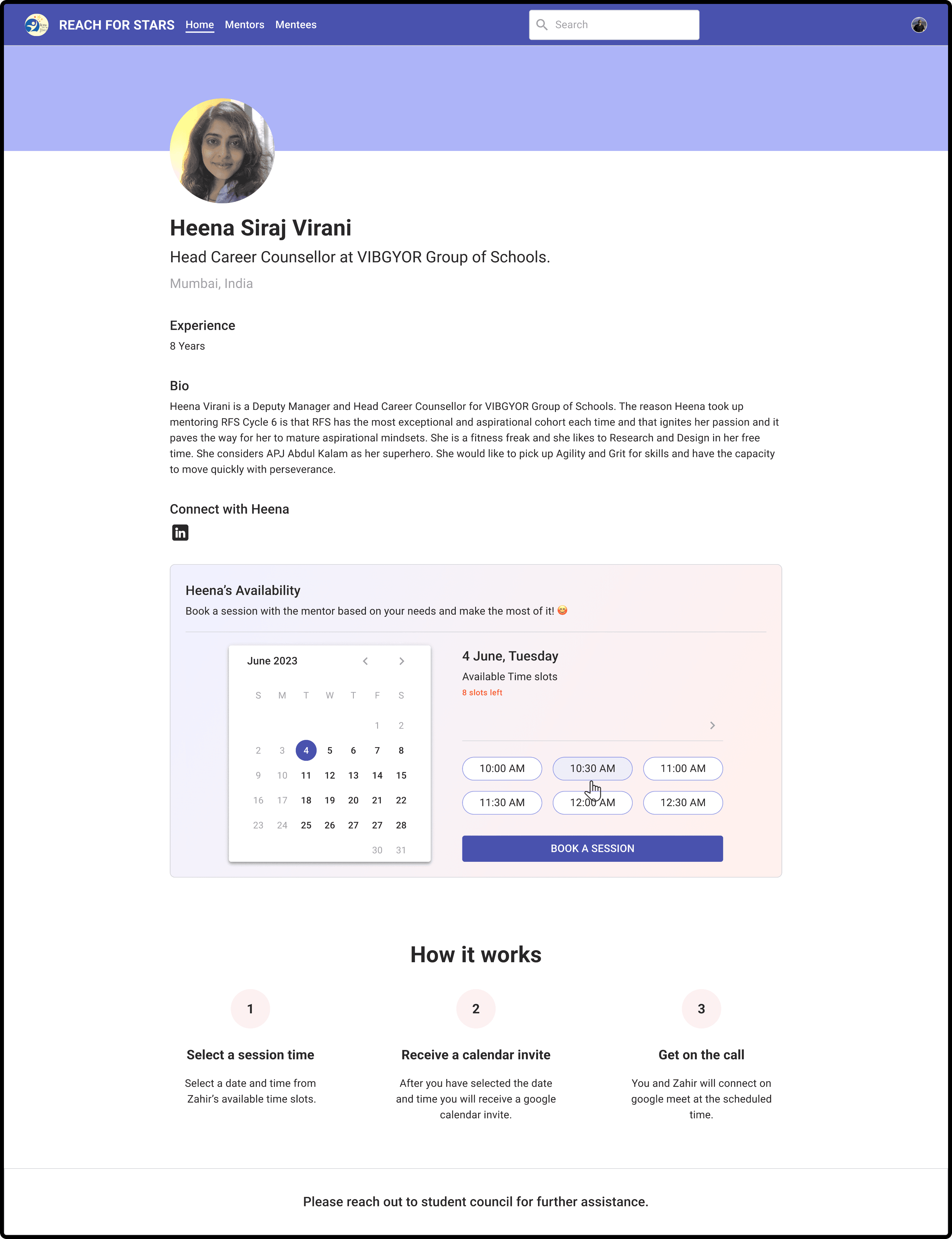
For RFS Mentees
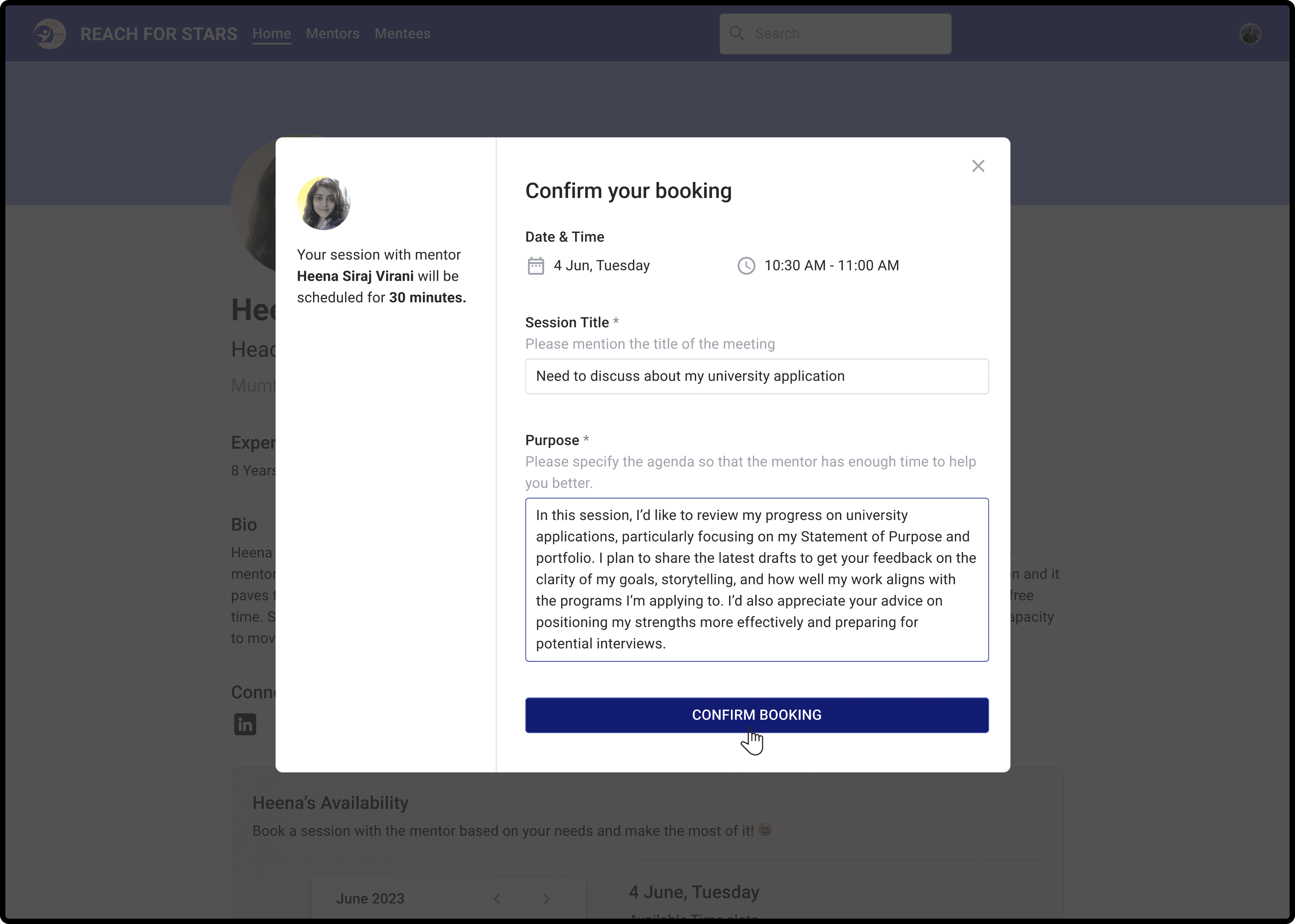
Prototype 3 (Scheduling Sessions)
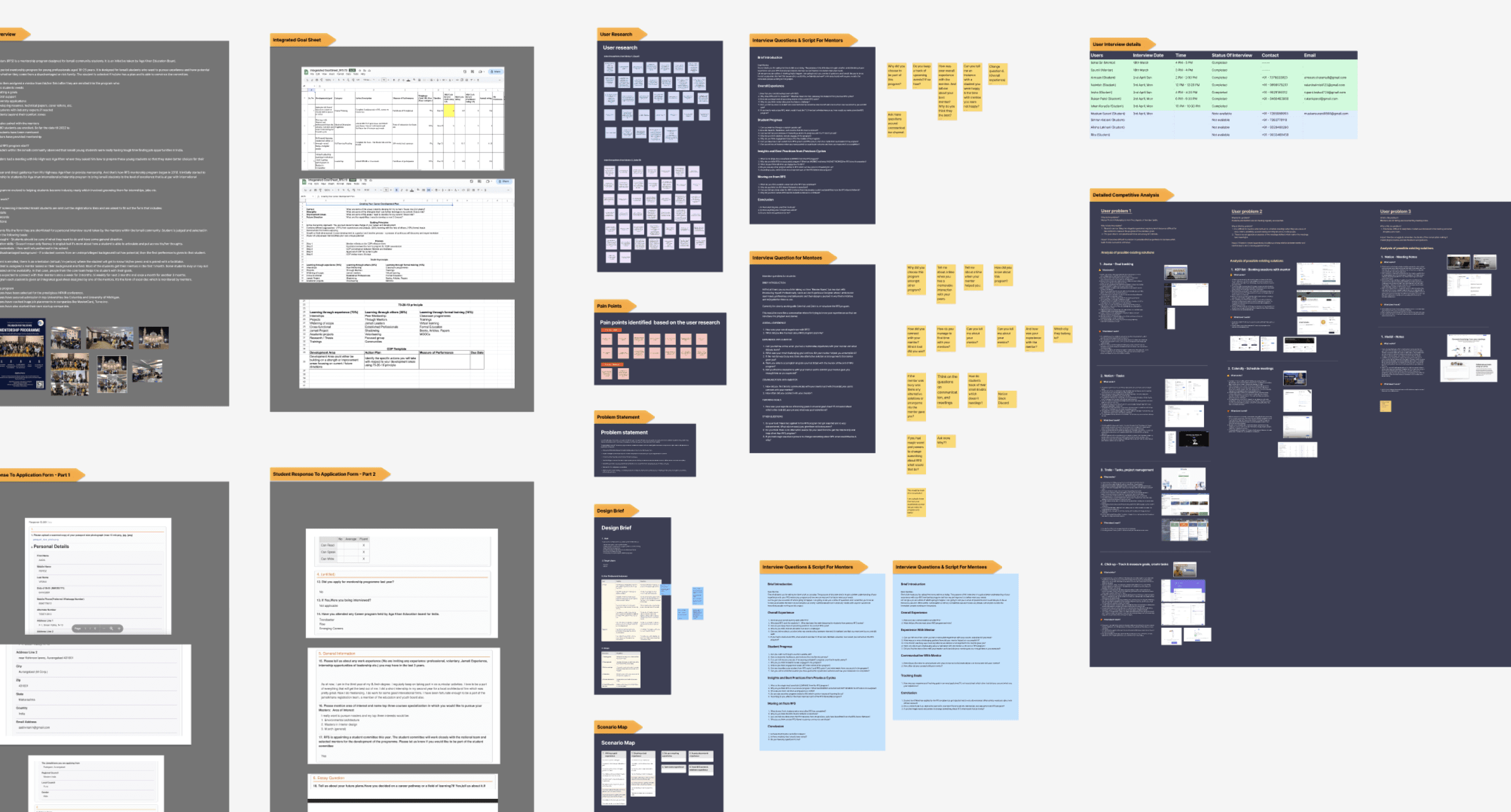
How we got here?
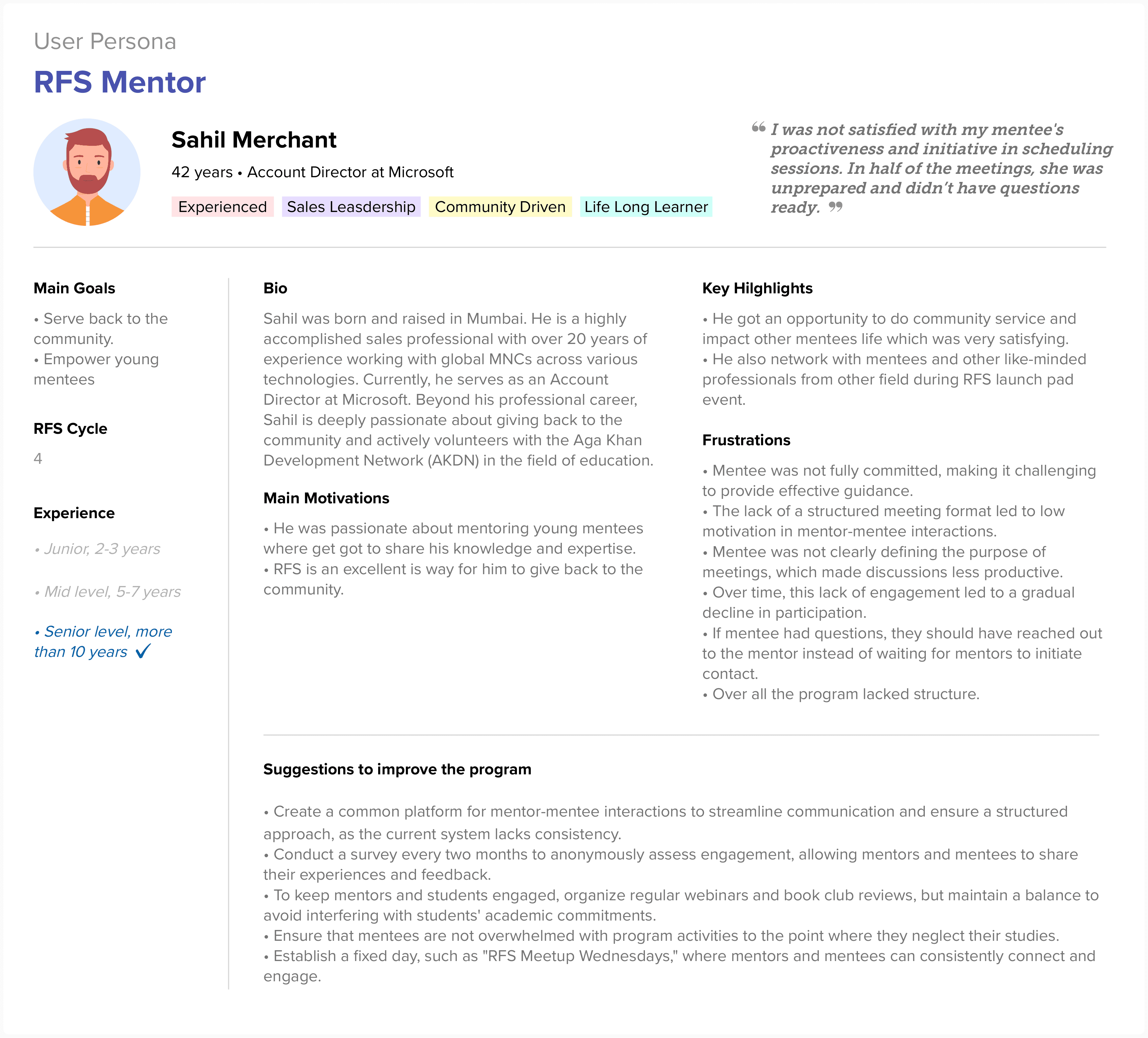
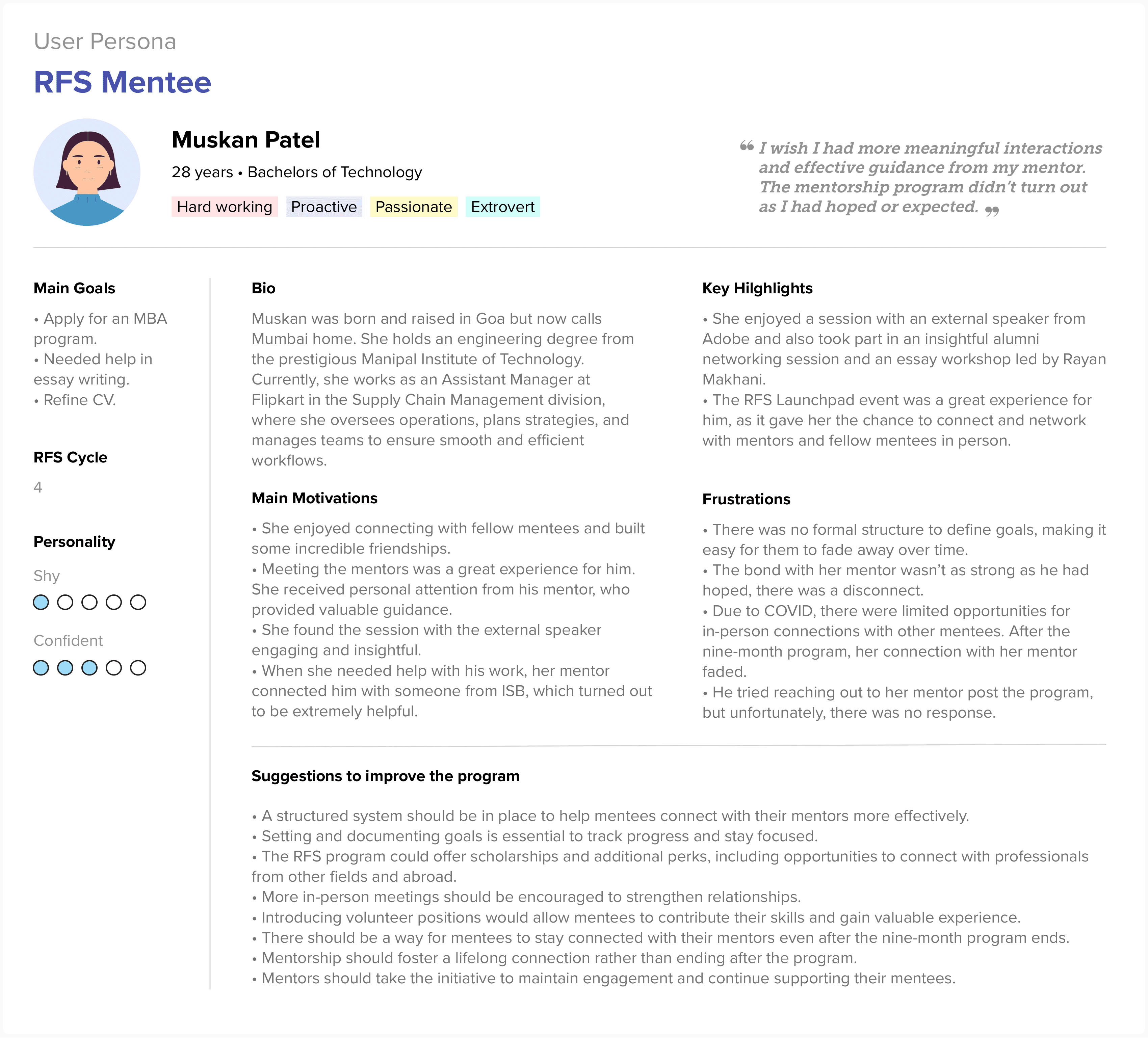
Qualitative Research
Conducted primary interviews with RFS Mentors & Mentees
To gain a deeper understanding of the program, I interviewed active RFS mentors and mentees during their 9-month journey to uncover their motivations, challenges, and overall experiences. I then organized the meeting notes and developed personas to synthesize these insights.



Uncovered pain points
01 / Lack of structure in
mentorship sessions
Most mentorship sessions lacked a clear structure. Coordination between mentors and mentees primarily took place through WhatsApp or phone calls, without any defined process or discipline, which often made the sessions less effective and inconsistent.
02 / Mentees were unprepared for sessions
Mentees rarely came prepared or defined a session agenda beforehand. This lack of clarity made it challenging for mentors to guide them effectively and limited the overall productivity of the sessions.
03 / Limited Networking Opportunities
Since the program operated remotely, mentees primarily interacted only with their assigned mentors. There were minimal opportunities to connect with other mentors or mentees, except during a single “Launchpad” event held once during the program.

Without a structured system, both mentors and mentees struggled to stay aligned, messages were lost, and sessions lost focus.
CURRENT STATE
Unstructured process of scheduling sessions
OUR SOLUTION
To structured process of scheduling sessions


We went from...

Ideation & strategy
Brainstorming ideas
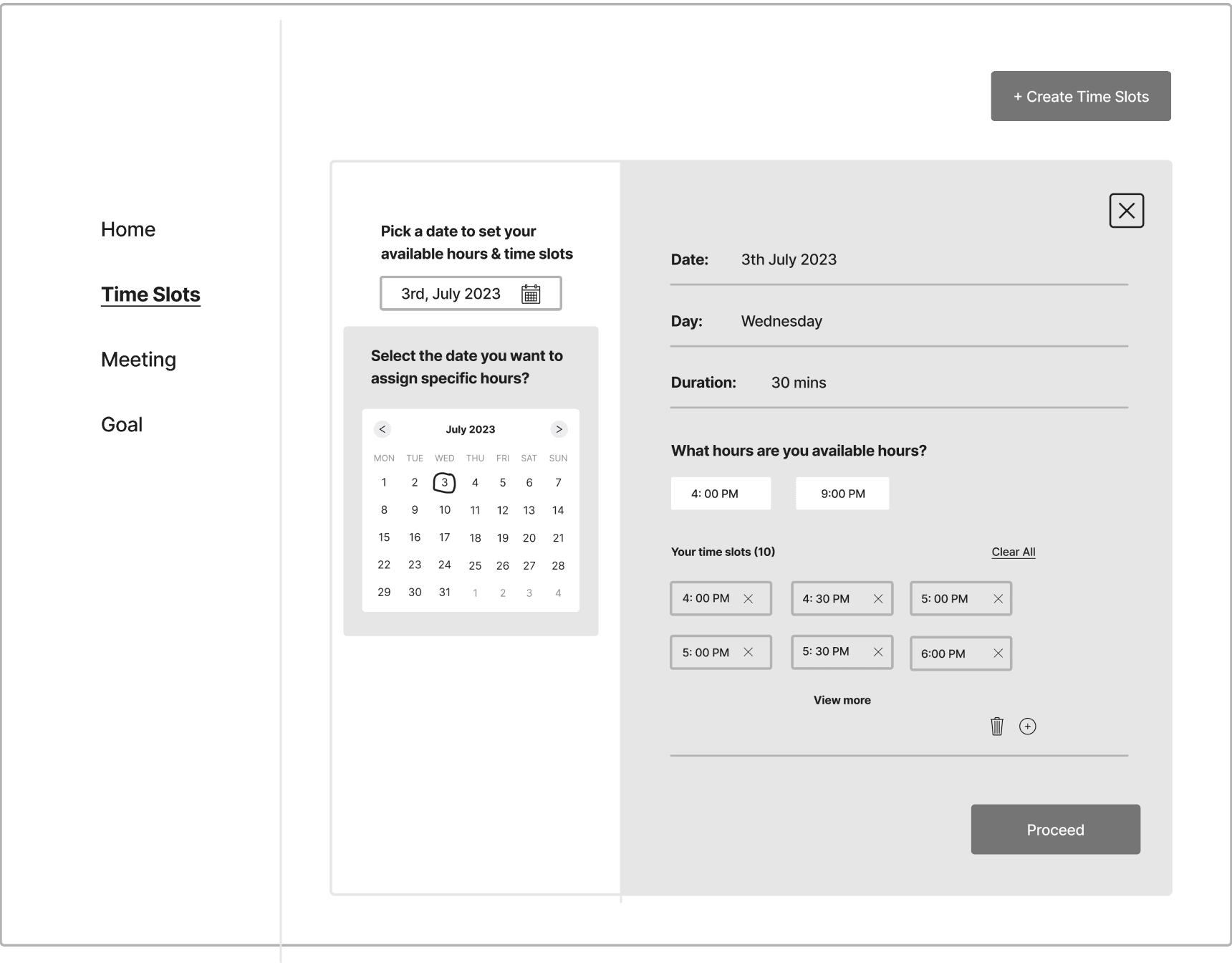
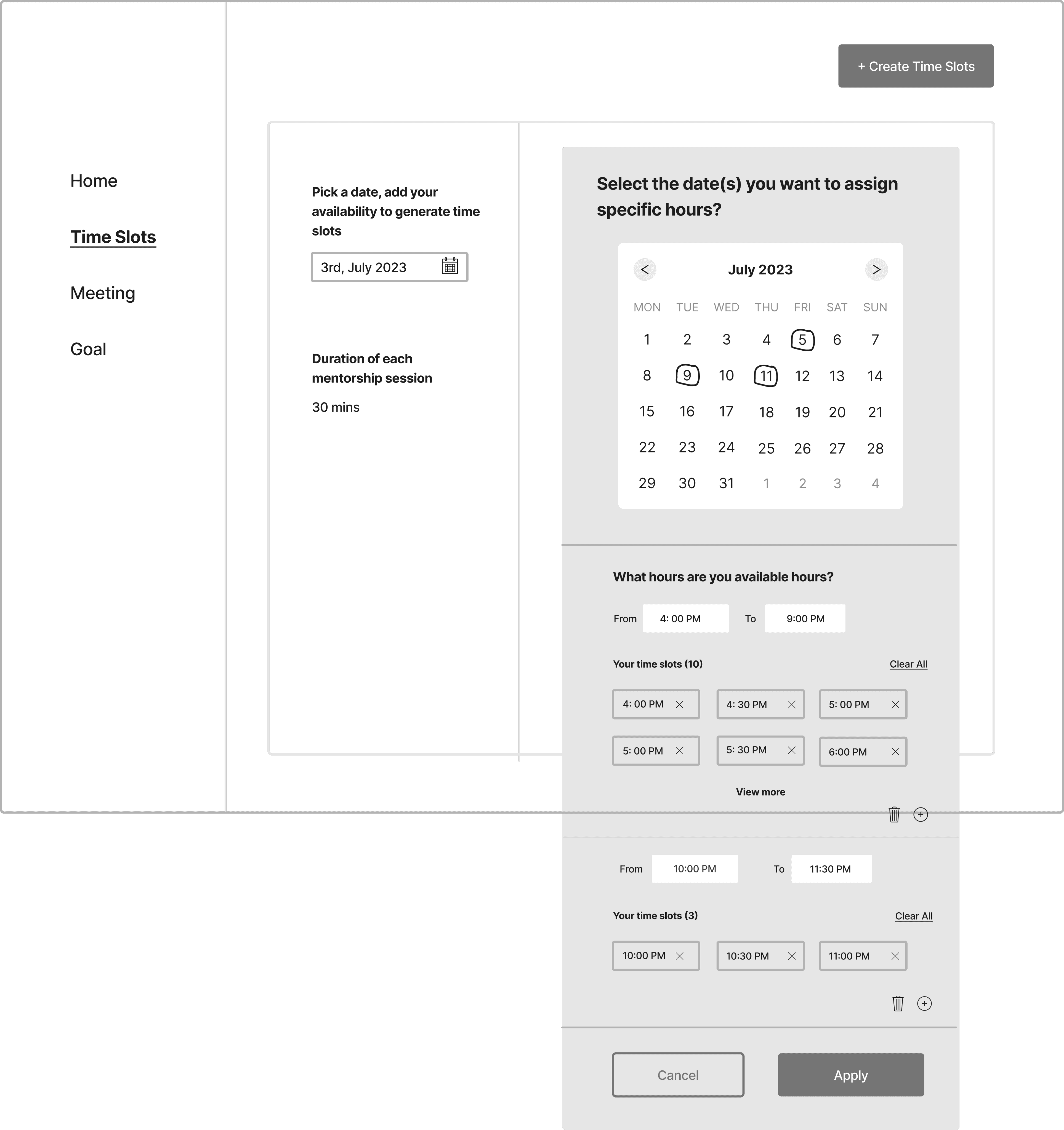
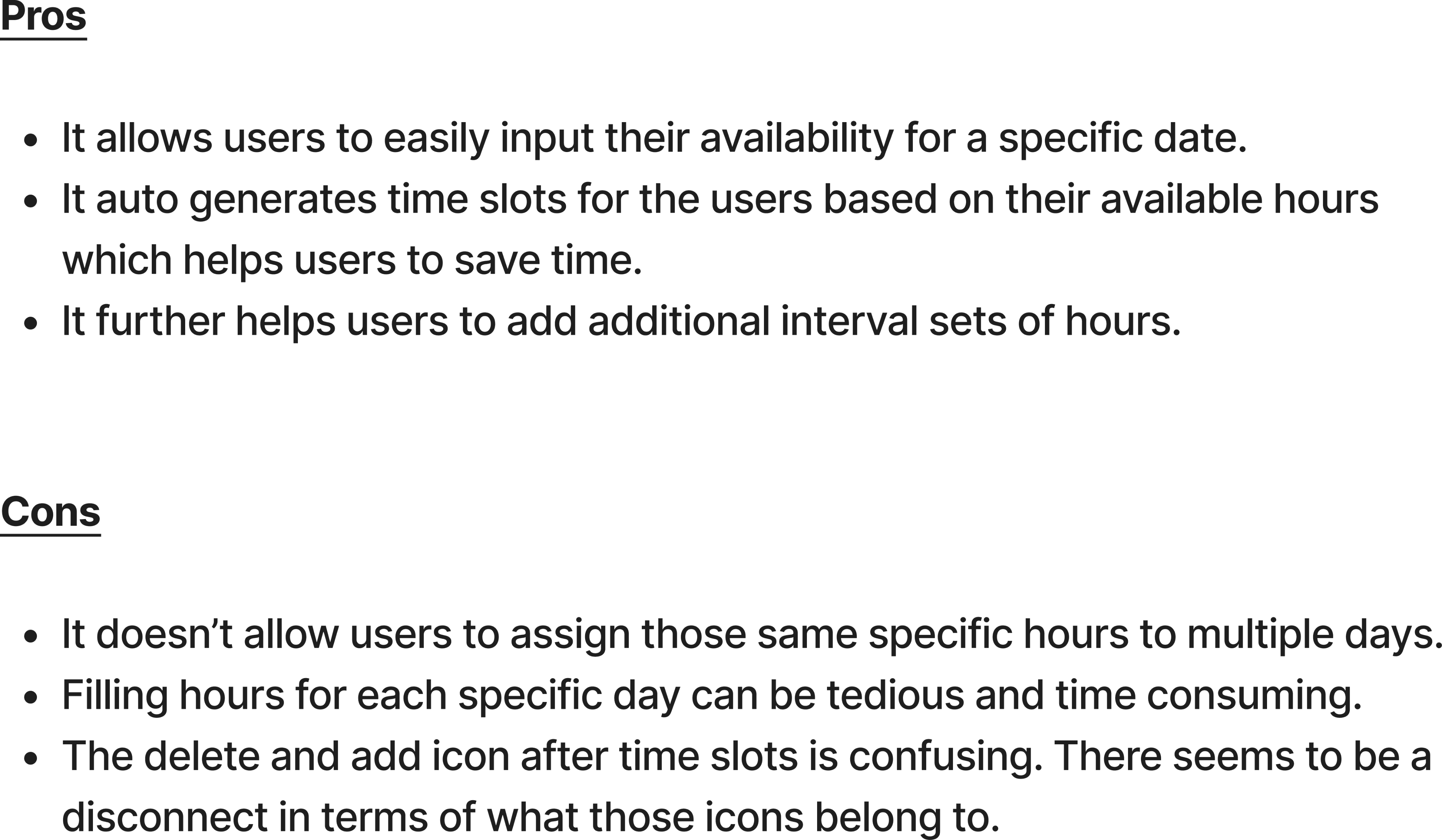
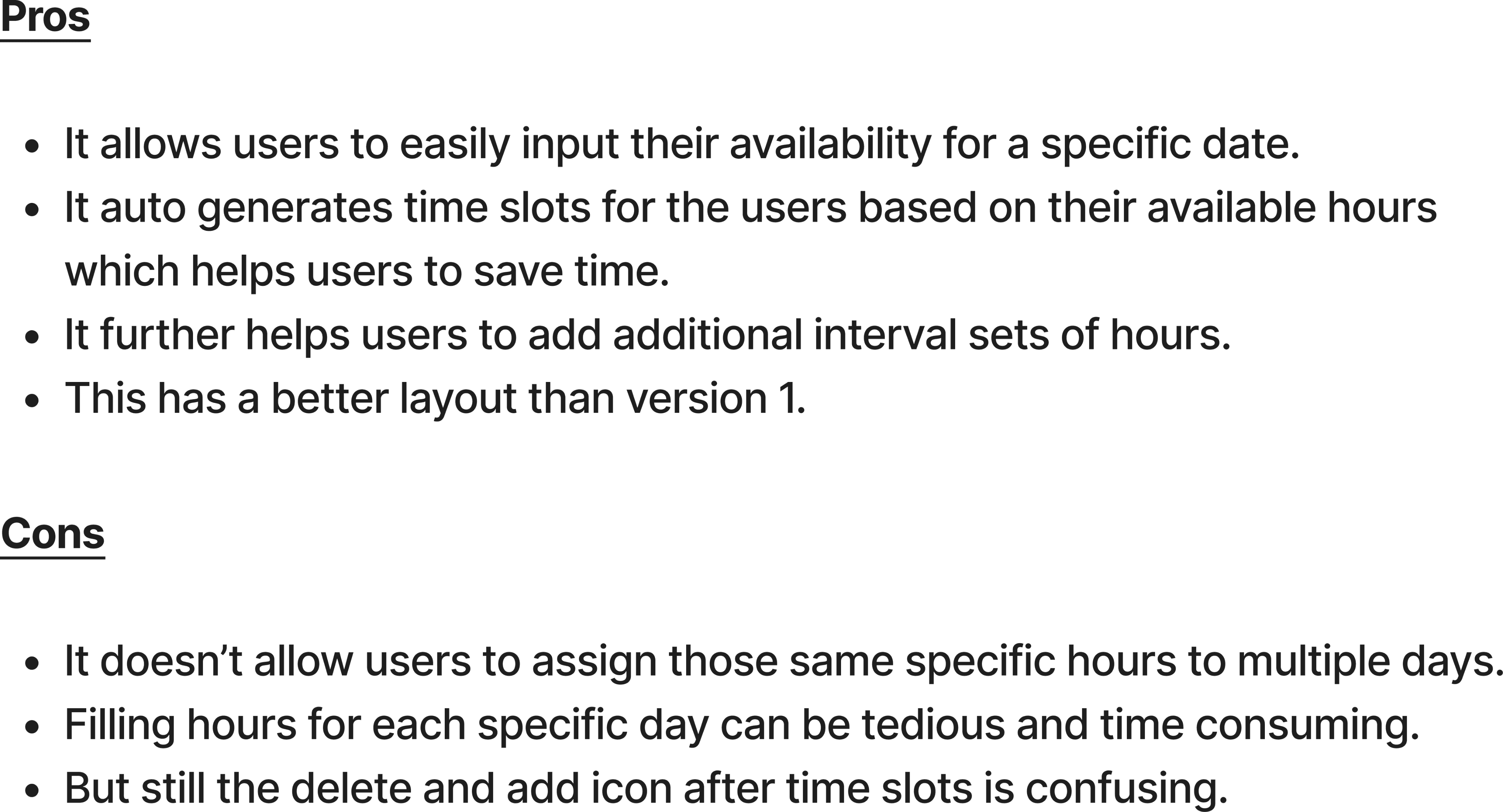
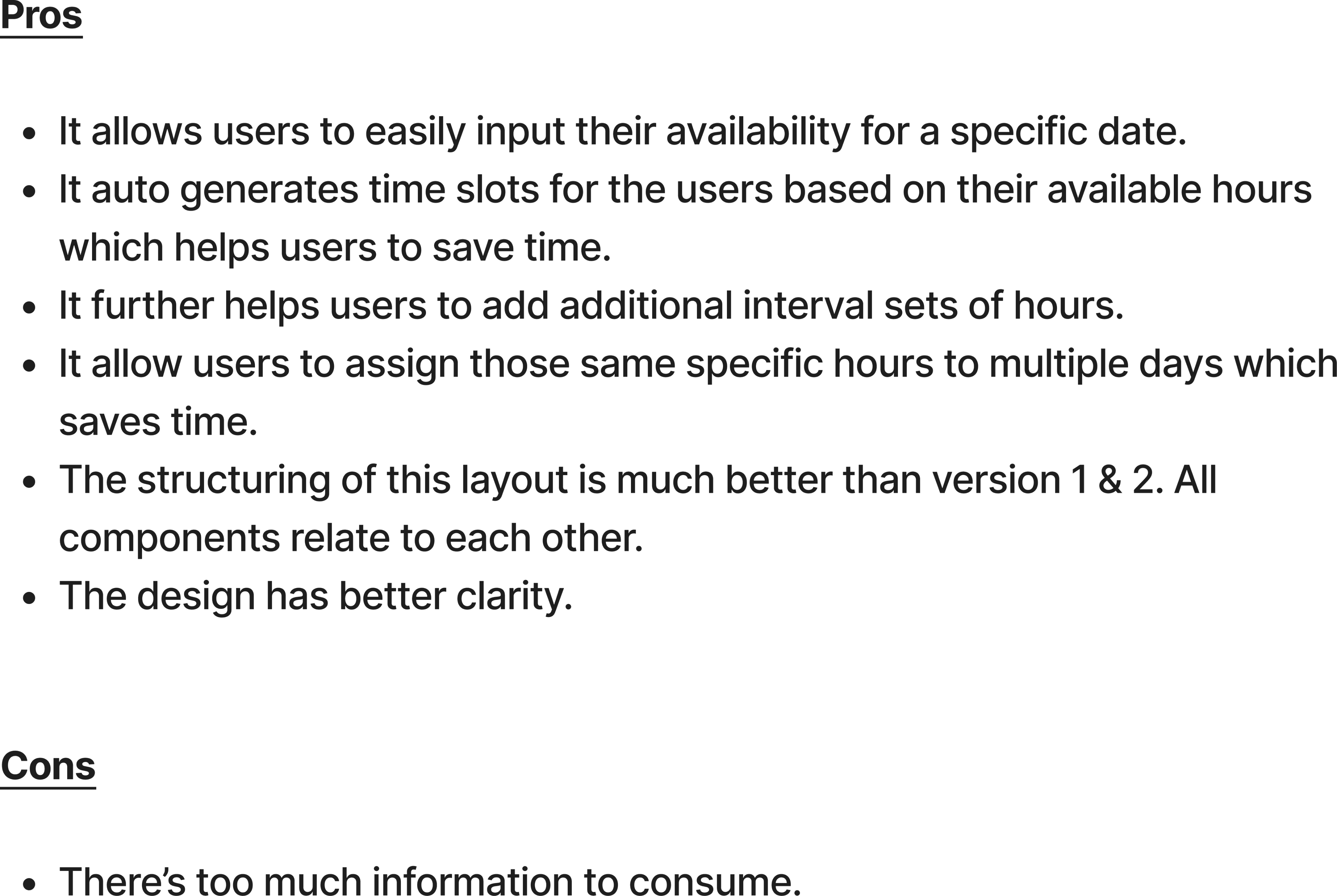
I created multiple versions of the availability screen where mentors could add their available hours, then outlined the pros and cons of each design. I discussed these options with the team to gather feedback and refine the final direction.
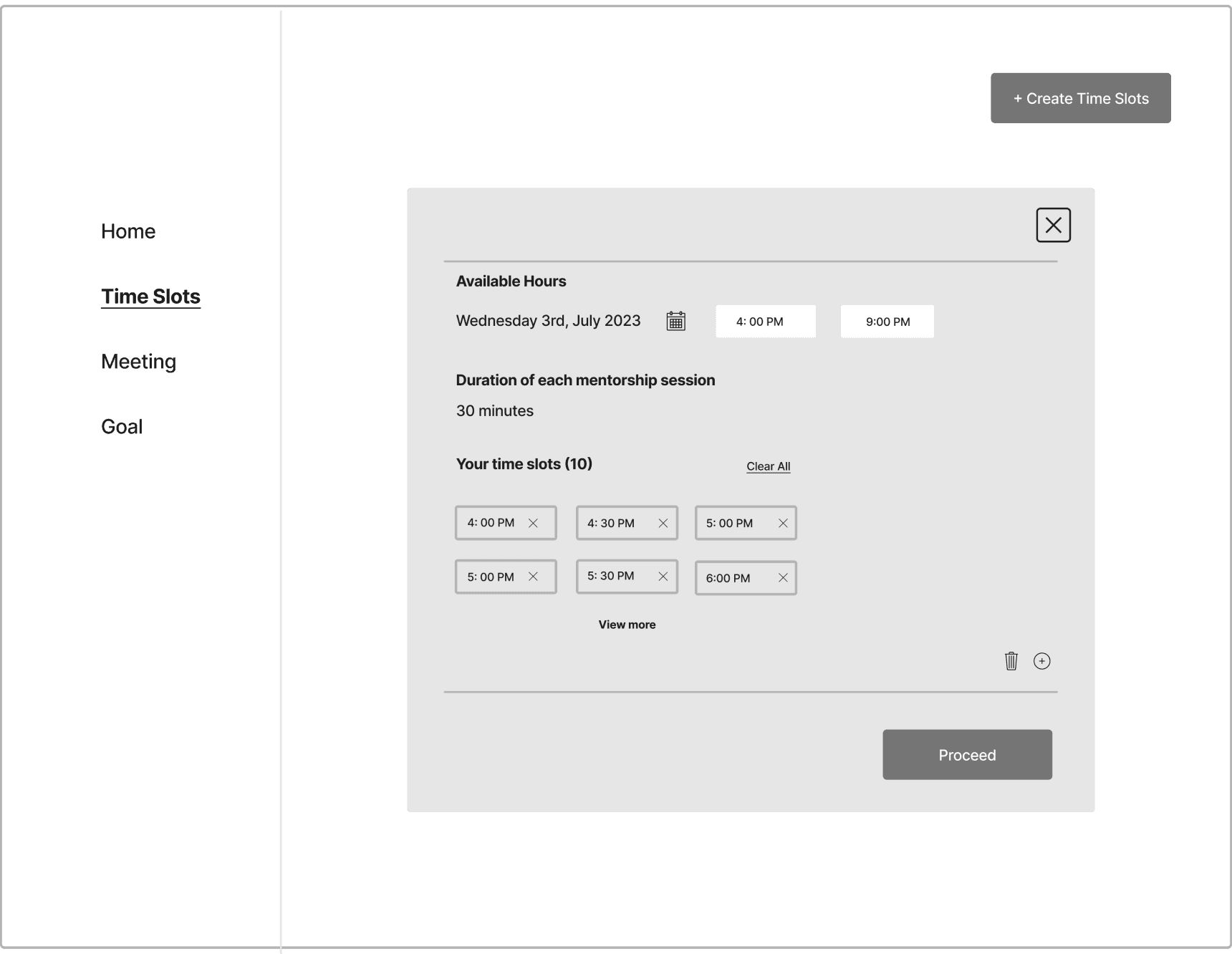
Variation 1
Variation 2
Variation 3
Final Design
Collaborated with engineers early on in the design process
I collaborated with engineers to understand the platform’s technical capabilities and learned that react framework was the one they were most comfortable with. Based on this, I built the design system using material UI components and Material icons to ensure compatibility with React framework. This approach significantly reduced development time and effort, as the pre-built components like calendars streamlined implementation and improved overall efficiency.
User testing
We then tested the initial prototypes with mentors and mentees by assigning them specific tasks and observing how easily they could complete them without guidance. This helped us evaluate whether the web app effectively addressed their challenges and understand their overall experience with the proposed system.
Mentor’s insights
Mentors were excited about the RFS application and expressed that the application will definitely help them improve the engagement with their mentees.
They found the availability module overall comfortable to use.
Mentors were a bit confused while adding the blockout dates.
They faced challenges in understanding how to edit their availability, as the edit icon was small and not easily visible.
Mentee’s insights
Mentees were excited about the idea of having an RFS web app.
They especially appreciated the ability to connect with mentors beyond their assigned one.
They suggested adding a section for RFS events and programs to keep them informed about upcoming activities.
Some also recommended including an RFS Gallery featuring photos from launch pad events to help mentees feel recognized and valued.
Impact metrics
#1 Session scheduling improved
4 weeks to 60 seconds
Mentors can now easily share their availability, and mentees can book a session in less than 60 seconds — saving significant time and eliminating the hassle of back-and-forth coordination.
Mentees can now connect with mentors and fellow mentees beyond their own network, creating opportunities for cross-collaboration and enabling them to learn from a wider community of mentors and peers.
#2 Networking opportunities opened
2.5% to 100%
Established design system foundation

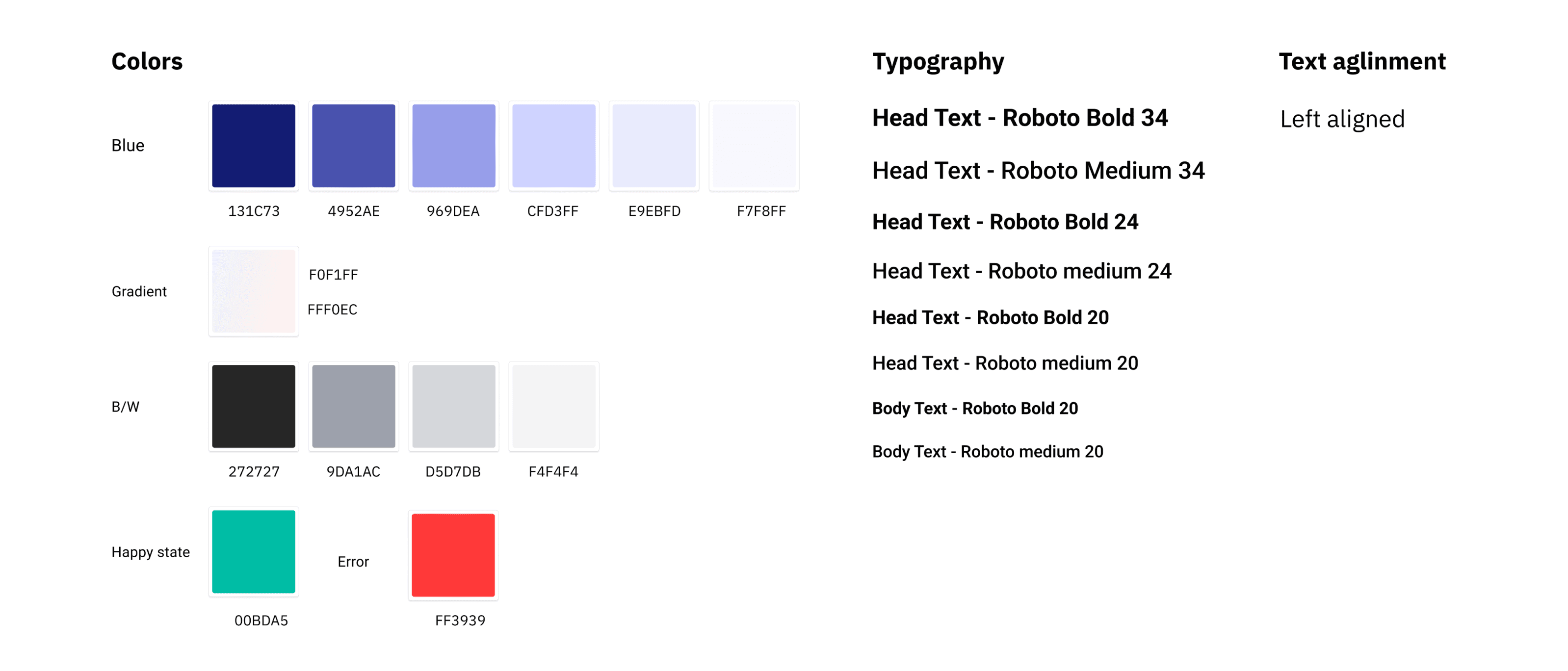
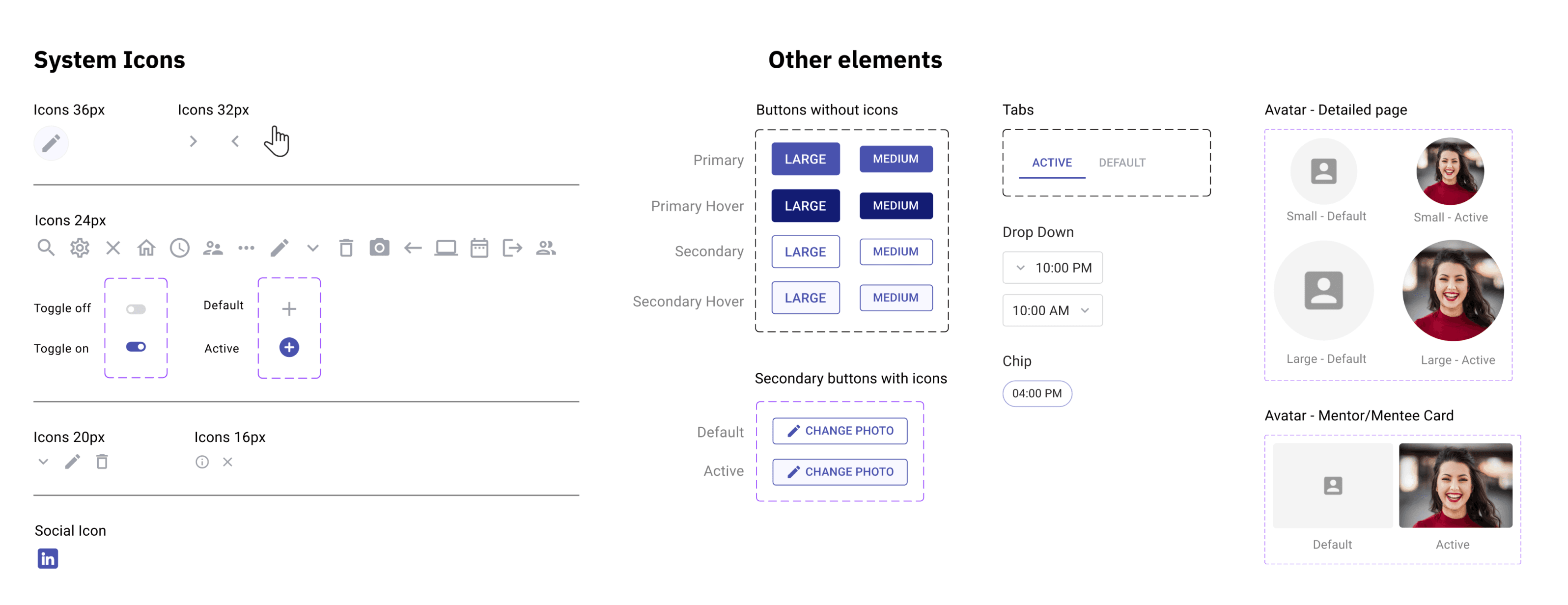
Final Visuals
Reflections and Learnings
Structure enables meaningful connections
We learned that mentorship thrives when structure supports it. The platform didn’t just make scheduling easier, it gave mentors and mentees a clear framework to plan purposeful sessions. Having defined agendas and availability built into the system helped both sides stay focused, aligned, and prepared for every conversation.
Collaboration strengths community
One of the biggest takeaways was realizing how much value mentees found in connecting beyond their assigned mentors. By opening access to the larger RFS network, the web app transformed isolated mentor–mentee pairs into a connected learning community where cross-collaboration and shared growth became natural.
Early testing strengthens the product
Testing and gathering feedback during the wireframing stage taught us that involving users early makes the product stronger. Iterating on wireframes is far more efficient and cost-effective than making changes after development—helping us refine ideas quickly and build with confidence.
back to top
ANAM KORADIA 2025. ALL RIGHTS RESERVED.
HAND CURATED WITH LOVE, CARE & LOTS OF COFFEE ☕️
THIS WEBSITE IS BEST VIEWED ON DESKTOP
If you like what you see then let’s
connect and build something together.

Anam Koradia
Thank you for being here.